
Your Friendly Birmingham
Driving School

Your Friendly Birmingham
Driving School
The practical test includes two “show and tell' questions regarding maintenance checks on your car. These will be chosen from the following:
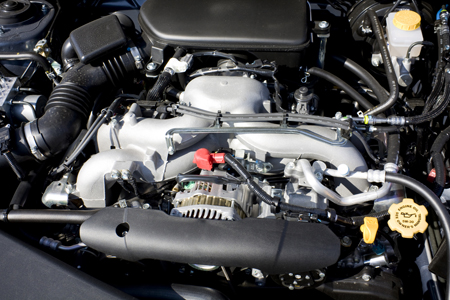
Q: Open the bonnet and identify where you check the engine coolant level and tell me how you check that the engine has the correct coolant level.
A: Identify the high/low level markings on the coolant header tank, and describe how to top up to the correct level.
Q: Open the bonnet and identify where you check the engine oil level and tell me how you would check that the engine has sufficient oil.
A: Identify dipstick and describe how to check the oil level against the minimum/maximum markers.
Q: Open the bonnet and identify the windscreen washer reservoir, and tell me how you would check the windscreen washer level.
A: Identify the reservoir and explain how to check level.
Q: Open the bonnet and identify where the brake fluid reservoir is, and tell me how you would check that you have a safe level of hydraulic brake fluid.
A: Identify the reservoir and high/low markings to check the level against.
Q: Tell me how you would check that the brake lights are working on this car.
A: By operating the brake pedal and check illumination by making use of reflections in windows, walls etc or by asking someone to help.
Q: Tell me how you would check that the brakes are working before starting a journey.
A: Brakes should not feel spongy or slack. Brakes should be tested as you set off and vehicle should not pull to one side.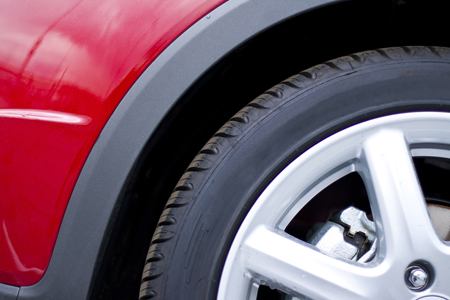
Q: Tell me where you would find the information for the recommended tyre pressures for this car and how would you check the tyre pressures.
A: The manufacturer's guide should state the tyre pressures which can be checked using a reliable pressure gauge. Pressure should be checked and adjusted when the tyres are coldand don't forget spare tyre (remember to refit valve caps).
Q: Tell me how you would check the tyres to ensure that they have sufficient tread depth and that their general condition is safe for road use.
A: There should be no cuts or bulges and 1.6mm of tread depth across the central ¾ of the of the tyre width and around the entire outer circumference.
Q: Show me how you would check that the power-assisted steering is working before starting a journey.
A: If the steering becomes heavy the system may not be working properly. Two checks can be made. Gentle pressure on the steering wheel, maintained while the engine is started, should result in a slight but noticeable movement as the system begins to operate. Alternatively, turning the steering wheel just after moving off will give an immediate indication that the power assistance is functioning.
Q: Show me how you would check that the headlights and tail lights are working.
A: Operate the light switch (turn on ignition if necessary) and walk around the vehicle to check lights function.
Q: Show me how you would check that the direction indicators are working.
A: Operate the indicators or hazard warning switch and walk around the vehicle to check all indicators function.
Q: Show me how you would check that the horn is working (off-road only).
A: Operate the horn (turn on ignition if necessary).
Q: Show me how you would check the parking brake for excessive wear.
A: Apply the parking brake and ensure that it secures itself when fully applied, and is not at the end of the working travel.
An instructor will contact you to confirm the booking.
Just contact us and we will do the rest.


